
Why We Travel
Why We Travel


Why travel? It’s expensive. Often frustrating. Sometimes dangerous. Yet every day some twelve million people board an airplane and go…somewhere. Millions more travel by train, road, boat, donkey. Why?
That question lies at the heart of my new podcast, Y We Travel, supported by Toronto Pearson Airport. Along with co-host Erica Vella, I explore why we explore. We talk to travel writers, anthropologists, naturalists, architects, influencers, foodies.
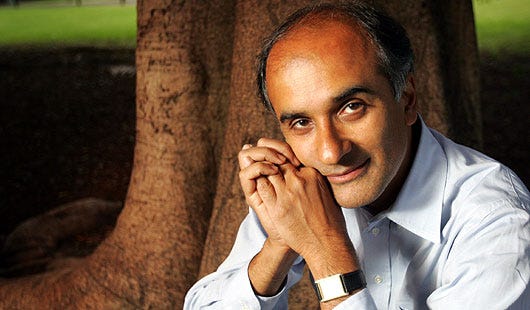
Episode one features my conversation with travel writer Pico Iyer. He’s written eighteen books and countless essays. (And now he can add a screen credit to his CV. He has an impressive supporting role in the movie Marty Supreme.) I find Pico’s observations always fresh and insightful. Here is a short excerpt from our conversation, but I encourage you to listen to the episode in its entirety.
Me: Pico, there are many reasons why people travel. You believe one reason is to “meet the neighbors.” You argue that it’s a folly not to get to know our neighbors. Our destinies are intertwined because “the consequences of a sneeze in Wuhan are felt in Manitoba.” So, are you suggesting it is no longer a luxury to meet the neighbors but a necessity?
Pico Iyer: You and I belong to the first generation in human history that can be in Tibet or Antarctica tomorrow. And even if we don’t have the chance to travel across the world, the whole of the world has come to our doorsteps. So I think our neighbors now are coming from all seven continents. Apart from the emotional excitement of travel, there’s almost a moral or political obligation in getting to know the neighbors.
Me: Sometimes the neighbors are just like us and sometimes they are different and sometimes they are very different. And I can’t think of a neighbor who is more different than the residents of North Korea, famously known as the Hermit Kingdom. Very few outsiders have been there. You have. Tell me the difference between reading about North Korea, hearing about North Korea, and actually going there.
Pico Iyer: I think people are very different from us until we meet them in the flesh, and that’s true even of that most foreign of planets, North Korea. And even though as a traveler you can’t see very much—every moment is scripted and every step is shadowed by your guide—nonetheless, just to meet it in three dimensions, just to see people looking after their kids and going shopping, riding the subway. All of that suddenly gives it a depth and a dimension that it doesn’t have when we’re just watching online images of this kind of Potemkin city.
When I sit here in my apartment and think about Syria or Iran or Cuba, I mostly think about all the ways they’re very different politically and historically and culturally. As soon as I get off the plane in any one of those places and get into a cab, the cab driver’s worried about his kids and he’s fretting about the economy. He’s complaining about the government. He sounds just like any cab driver in Toronto or New York. In other words, the very fact of travel or encountering another culture in the flesh dissolves a lot of the sense of difference.
Me: I can see a lot of people listening to this and thinking, maybe a hundred years ago, fifty years ago, twenty years ago, in order to experience fresh things, a new outlook, you had to travel. But now there’s the internet and there’s AI. And it’s certainly tempting. You could have learned an awful lot and “experienced” North Korea by going online. And in fact, you describe visiting a state-of-the-art virtual reality booth at a TED conference in Vancouver. I’ll let you describe it, but at first, it’s mimicking the Amazonian rainforest. Tell us what happens from there.
Pico Iyer: Yes. So I step into it, and I can hear the chatter of tropical birds. I can see the rich greens of the Amazon rainforest. I can almost feel the precipitation on my face. And then I step out again and I realize it’s everything essential about the experience that I haven’t got. It’s a sense of surprise. It’s a sense of sweat on my face that I’ve earned that experience. It’s a silence between the chatter over the birds. And I do feel that the more reality is virtual and the more intelligence is artificial and the more news is fake, the greater is the premium of encountering reality in the flesh.
I’m often struck how, let’s say, if you’re a U2 fan, people now will spend three hundred dollars or five hundred dollars to be in the back of a stadium watching U2 on a huge screen even though they could watch the same concert in the comfort of their home in high definition for free a hundred times over online because the premium of encountering something unscripted, unexpected in the flesh is much greater than it ever was thirty years ago.
Me: Which is ironic, because travel and travail share a common root, and not accidentally. Travel has always been difficult. If you go back through the centuries, you were risking your life anytime you sailed across the Atlantic in the eighteenth century or in the thirteenth century, on pilgrimage to Jerusalem. And these were long, dangerous journeys and I think maybe that difficulty is part of the appeal of travel actually. And you write about this earned epiphany that you want to earn your revelations. You don’t want them handed to you on a website or from an AI chatbot. What do you think of that theory that in fact we want travel to be a little bit difficult?
Pico Iyer: You and I as travel writers know that the dirty secret of travel writing is the worse the experience, the better is the story that you can impress or inflict upon your friends at the end of it. In some ways, you’re hoping to go off course.
Me: The worst thing that can happen for a travel writer is for everything to go according to plan. That’s a disaster.
Pico Iyer: Many people are stuck in an office fifty weeks a year. And when they have two weeks off, of course, they want to crash out on a beach. But I live between two quite comfortable and easy places, Japan and California, so when I travel, I want to go somewhere uncomfortable and uneasy. I want to be out of my comfort zone, and I want to be somewhere as different as possible from the world I know in the hope that I will come back a slightly different person from the one who left.
Exciting, Eric! Can’t wait to add to my podcast walk list
This is terrific, what a fun topic. All the best with it